Costa Rica Car Seat Laws for Family Travelers
If you are driving with kids in Costa Rica, the law requires an approved child seat for any child under 12 years old and shorter than 1.45 meters (about 4 feet 9 inches). That rule covers rental cars too, and the fines for skipping it are real. This guide walks families through the Costa Rica car seat laws, how seats work in rental vehicles, and how to travel safely with children on local roads.
What Do the Costa Rica Car Seat Laws Require?
Costa Rican traffic law requires a child restraint for every passenger who is both under 12 years old and under 1.45 meters tall. Both conditions must be met before a child can ride with a standard seat belt alone. The rule applies to private cars and rental cars equally, so visiting families are not exempt.
The specific seat changes as a child grows. The law sets out roughly four stages based on age, weight, and height:
- Rear-facing infant seat for babies up to about one year, generally up to 13 kg and 75 cm, installed in the back seat.
- Forward-facing seat for toddlers roughly one to four years, around 9 to 18 kg.
- High-back booster for children about four to six years, around 15 to 25 kg.
- Backless booster for older children up to the age 12 and 1.45 meter cutoff.
One point trips up many tourists. Licensed taxis and public buses are exempt from the child seat requirement, but rental cars are not. Seeing a child ride belt-only in a San Jose taxi does not mean the same is legal in your rental. For a wider view of local rules, see our guide to Costa Rica driving laws every tourist should know.
Should You Rent a Car Seat or Bring Your Own?
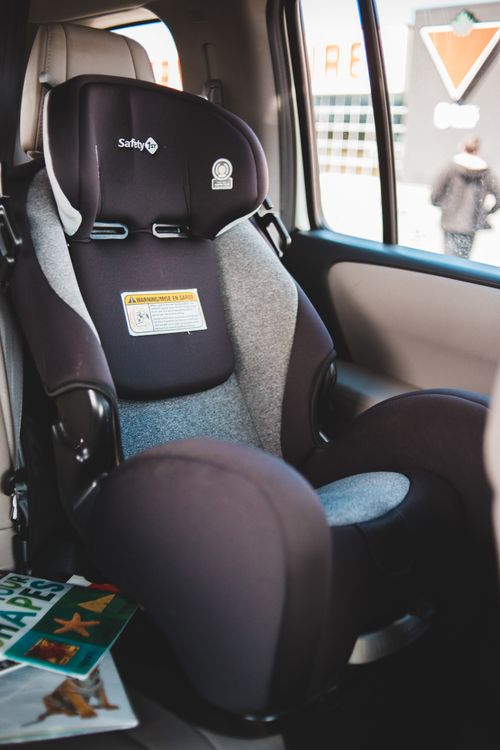
For most families, renting a seat at pickup is the simpler option. Airlines often allow car seats as free checked baggage, but a seat can be bulky to haul through two airports, and damage in transit is common. Weigh convenience against control before you decide.
Bringing your own seat makes sense when your child has a specific, familiar seat, or when your trip includes long drives where comfort matters. Just confirm your seat is compatible with a lap-and-shoulder belt or a standard anchor system, since some older seats are not.
Renting a seat removes the guesswork. At Altura Rental Cars near San Jose Airport, you can add an infant seat, a convertible seat, or a booster to your booking, and the seat is matched to your vehicle. Reserve it when you book the car so it is ready and waiting rather than subject to same-day availability.
Installing a Car Seat in a Rental Vehicle
A proper installation depends on the belts your vehicle has, and this is where rental choice matters most. Car seats need a three-point (lap-and-shoulder) belt or a dedicated anchor system to install correctly. Some older tourism vans only have two-point lap belts in certain seats, which cannot secure a modern child seat safely.
Because of that, families traveling with car seats are usually better served by a sedan or SUV than a stripped-down passenger van. If you are weighing vehicle types for Costa Rica's terrain, match the car to both your route and your passengers before you confirm the booking.
When you pick up the car, check three things before you leave the lot. Confirm the seat does not shift more than an inch side to side at the belt path, that a rear-facing seat is reclined to the correct angle, and that the harness sits snug with the chest clip at armpit level. If anything looks off, ask the rental staff to help rather than guessing in an unfamiliar vehicle.
What Are the Fines for Non-Compliance?
Skipping a required child seat carries a traffic fine plus points added to your license, and officers do check. In the first six months of 2026, Costa Rican traffic police fined 472 drivers for failing to use a child safety seat (Q Costa Rica, 2026). That pace shows the rule is enforced, not just written.
The financial hit is only part of the picture. A rental car seat typically costs a small daily fee, far less than a single fine, so compliance is the cheaper choice as well as the legal one. Add the seat when you reserve the car, and the cost stays a predictable line item rather than a surprise.
The deeper reason to comply has nothing to do with money. Child restraints work. According to the National Highway Traffic Safety Administration, correctly installed car seats reduce the risk of fatal injury by 71% for infants under one year and by 54% for toddlers aged one to four in passenger cars (NHTSA). Those are the numbers that matter most on an unfamiliar road.
How Can You Travel Safely With Kids in Costa Rica?
Costa Rica's roads can be narrow, winding, and steep, especially heading to mountain destinations, so a secured child and a calm plan make a real difference. Start by matching your seat to your child's current height and weight, not the age printed on the box, since fit is what protects.
A few habits go a long way on local roads:
- Always seat children in the back, which the law requires for younger kids and which is safer for all children.
- Break long drives into shorter legs. A route to a cloud forest or volcano can take hours on slow roads.
- Keep the chest clip at armpit level and the harness snug every single time, not just on the highway.
- Carry water, snacks, and shade for the car, since afternoon heat builds fast when you stop.
Plan your driving days around daylight when you can. Rural roads have few lights, and rainy-season downpours cut visibility quickly. Routes change in the wet months between May and November, so build in extra time and keep the kids secured for the full trip, not just the highway stretches.
Planning Your Family Rental
Reserve your child seats at the same time you book the vehicle. That single step locks in the right seat for your child's size, guarantees it is installed and inspected at pickup, and keeps you on the right side of a law that officers actively enforce. Contact Altura Rental Cars when you confirm your dates, share each child's age, height, and weight, and arrive to a car that is ready for the whole family.
Frequently asked questions
What are the car seat laws in Costa Rica?
Costa Rican traffic law requires an approved child restraint for every child who is under 12 years old and under 1.45 meters tall. The seat type depends on the child's age, weight, and height, from rear-facing infant seats to backless boosters.
Do I need a car seat for a child in Costa Rica if I am a tourist?
Yes. The law applies to everyone driving a private or rental vehicle, including visitors. Only licensed taxis and public buses are exempt, so your rental car must carry an approved seat for any qualifying child.
Can I rent a child seat with my car in Costa Rica?
Yes. Most rental companies, including Altura Rental Cars near San Jose Airport, offer infant seats, convertible seats, and boosters as add-ons. Reserve the seat when you book so it is ready and installed at pickup.
What happens if you do not use a child seat in Costa Rica?
Drivers face a traffic fine plus points added to their license. Costa Rican police reported fining 472 drivers in six months of 2026 for this violation, so enforcement is real and routine.
Are car seat rules in Costa Rica stricter than in the United States?
In many ways, yes. The 1.45 meter height and age 12 threshold is firmer than several US state rules, so American families often need a booster for an older child than they would back home.