Fuel Costs in Costa Rica 2026: Driver's Guide
Filling up in Costa Rica costs about 764 colones per liter for gasolina super and 719 colones for regular as of October 2026, roughly USD 1.57 to 1.67 per liter (Infobae / ARESEP, 2026). That puts Costa Rica gas prices 2026 a little above the world average, so fuel deserves a spot in your trip budget alongside lodging and tours. This guide walks through current rates, how prices are set, what a typical road trip will cost, where to fill up, and which vehicles save you the most.
What Are the Current Gas Prices in Costa Rica?
As of October 2026, gasolina super runs about 764 colones per liter and regular about 719 colones, while diesel sits near 785 colones (Infobae Costa Rica, 2026). In U.S. dollars that lands around 1.57 to 1.72 per liter, or roughly 5.90 to 6.50 per U.S. gallon.
One detail surprises many first-time visitors in 2026: diesel is now more expensive than both grades of gasoline, a reversal that had not happened in over three years. The jump followed a 97 colon per liter increase tied to higher crude costs. For most travelers that means a gasoline vehicle, not diesel, is the cheaper option this year.
Most rental cars in Costa Rica take regular gasoline. Super is only needed if your vehicle's fuel door or manual calls for it, so check before you assume you need the pricier grade.
How Is Fuel Priced and Regulated in Costa Rica?
Costa Rica fuel costs are set by a government regulator, not by individual stations, so the price is uniform across the country. The regulator ARESEP publishes an official rate each month, and the state company RECOPE imports and distributes all finished fuel. Transport costs are built into the national tariff, which is why a remote beach pump charges the same as one in the capital.
The pump price breaks down into clear pieces. International acquisition costs make up about 49% of the total, taxes account for roughly 36%, and RECOPE's own operations represent around 5% (Delfino.cr, 2026). That heavy tax and import share is the main reason prices stay elevated even when global oil dips.
Why does this matter to you as a visitor? It means you cannot shop around for a cheaper station. There are no price wars and no loyalty discounts on the fuel itself. Your only real levers are how far you drive and how efficient your car is.
How Much Should You Budget for Fuel on a Road Trip?
Budget fuel by estimating your total distance, then working backward from your car's economy. A full 40-liter tank costs about 6% of average monthly income in Costa Rica, a reminder to treat fuel as a real line item on your trip (GlobalPetrolPrices.com, 2026).
Here is a simple method. Take your planned kilometers, divide by your car's economy in kilometers per liter, then multiply by the per-liter price. A compact that returns 14 kilometers per liter driving 600 kilometers in a week burns about 43 liters, or roughly USD 70 at current regular prices. A thirsty 4x4 on rough mountain roads can easily double that.
Distances add up faster than many expect because of terrain. The drive from San José toward Guanacaste beaches or up to Monteverde involves climbs and winding sections that cut efficiency. For route planning and realistic drive times, see our guide on the San José to Tamarindo drive. Padding your fuel estimate by 15 to 20% is sensible for hilly itineraries.
Where Do You Find Gas Stations on Main Routes?
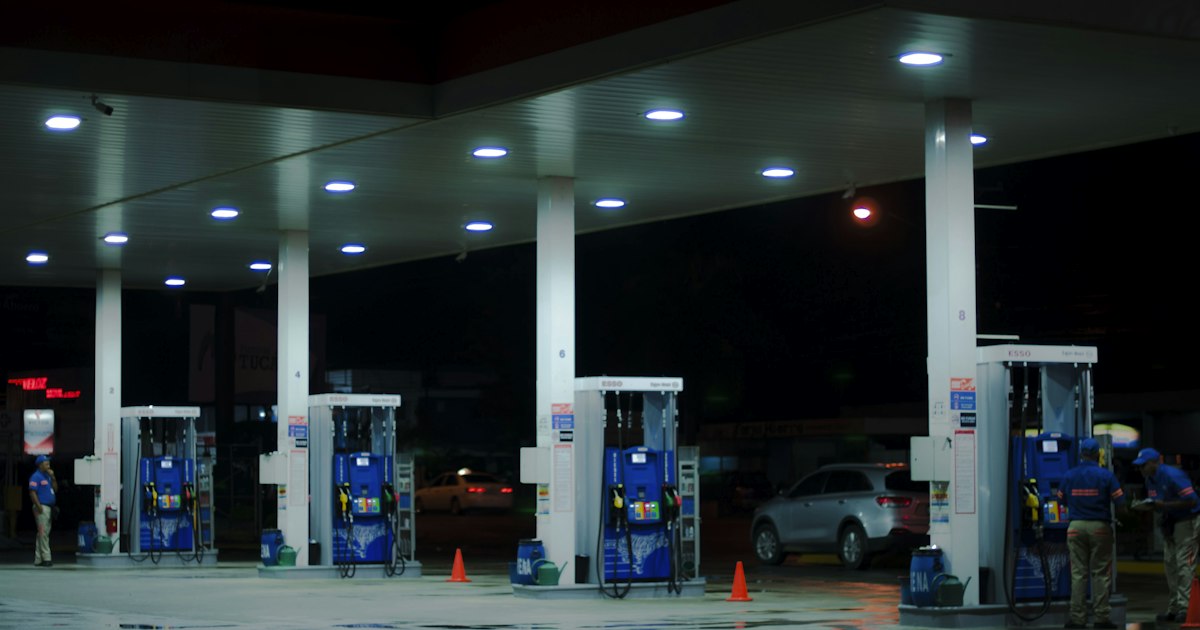
Stations are plentiful along the Pan-American Highway and the main corridors out of San José, but they thin out on remote peninsulas and mountain roads. Fuel is sold through branded and independent stations, all charging the same ARESEP-set price, so pick based on convenience rather than cost.
A few practical habits keep you from running low. Fill up before leaving the Central Valley for destinations like the Nicoya Peninsula or the Osa, where gaps between stations grow. Keep your tank above a quarter on long transfer days. Most stations on busy routes are full-service, meaning an attendant pumps for you, and the majority accept credit cards. Carry some colones for rural pumps and small tips.
Hours vary too. Larger stations on the Pan-American run long days and some stay open around the clock, while small rural outlets may close in the evening. On a late arrival or an early start, fill up while you can rather than gambling on a pump being staffed after dark.
Mapping apps show station locations, but signal drops in the mountains, so note your next fill point before you lose coverage. If you are flying in and driving straight out, our San José Airport car pickup guide covers the first leg so you start your trip with a clear plan and a full tank.
Which Vehicles Save You the Most on Fuel?
Fuel-efficient vehicles can cut your Costa Rica gas prices 2026 bill in half compared with a large SUV. Costa Rica sits a touch above the world average on fuel, with pump prices near 106% of the global mean, so every kilometer per liter you gain translates into real savings on a multi-day trip (GlobalPetrolPrices.com, 2026).
A compact sedan or small hatchback is the economical choice for paved routes between the airport, San José, and the Central Valley. Hybrids, where available, stretch a tank further and shine in city stop-and-go traffic. The trade-off comes when roads turn rough: some beaches, waterfalls, and lodges sit at the end of gravel or river crossings that a low compact cannot handle.
That is the real decision. Match the car to your route rather than defaulting to the biggest or smallest option. If your itinerary mixes highways with unpaved access roads, a fuel-conscious crossover can be a smart middle ground. Altura Rental Cars can help you weigh economy against ground clearance for your specific stops, so you are not paying to haul a heavy 4x4 on roads that never needed one.
Keep Fuel From Surprising Your Budget
The single best move before you drive off is to match your vehicle to your actual route and estimate liters in advance using the simple distance-divided-by-economy method above. Pull up your planned stops, add the climbs, pick the smallest car that handles your roads, and you will keep fuel a predictable line item rather than a surprise. When you are ready to book, talk through your itinerary with Altura Rental Cars so the car you reserve fits both the terrain and the budget you have in mind.
Frequently asked questions
How much does gas cost in Costa Rica in 2026?
As of October 2026, gasolina super is about 764 colones per liter and regular about 719 colones, which works out to roughly USD 1.57 to 1.67 per liter. Diesel is near 785 colones.
Why is gas the same price everywhere in Costa Rica?
The regulator ARESEP sets a single national price each month and builds transport costs into the tariff. You pay the same whether you fill up in San José or a remote beach town.
Is diesel cheaper than gas in Costa Rica?
Not in late 2026. Diesel rose above both gasolines for the first time in over three years, reaching about 785 colones per liter. A gas vehicle is usually the cheaper rental choice now.
How much should I budget for fuel on a Costa Rica road trip?
Estimate your total kilometers, divide by your car's economy, then multiply by the per-liter price. A week of regional driving in a compact often lands between USD 60 and 120.
Do Costa Rica gas stations take credit cards?
Most stations on main routes accept cards and are full-service, with an attendant pumping for you. Carry some colones as a backup for rural stations and small tips.